Travel Tech · Comparison
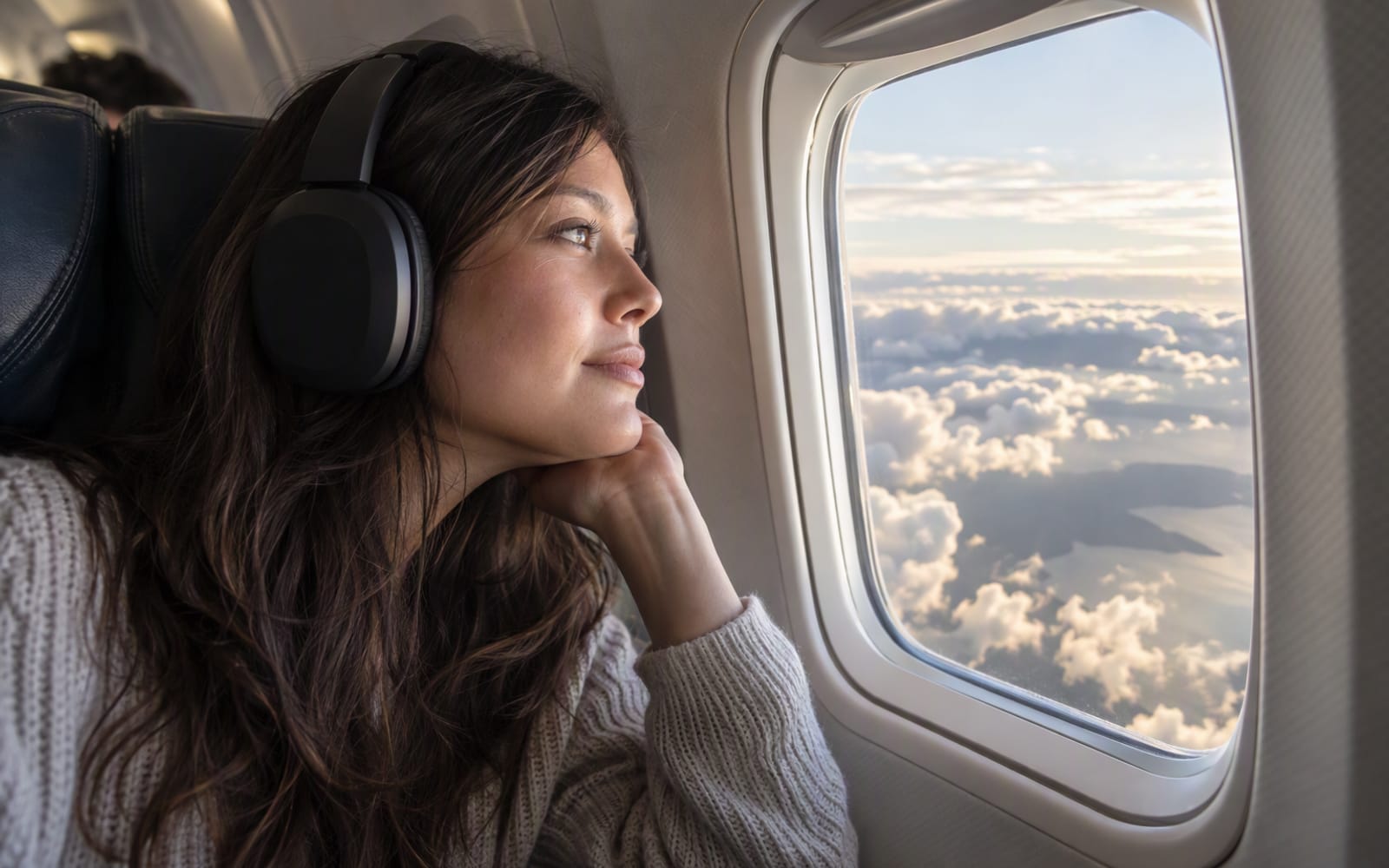
A plane is a very specific listening environment, and it is worth understanding why before you pack. The dominant sound in a cabin is not conversation and it is not a crying baby. It is a continuous, low, steady roar from the engines and the airflow, and it stays remarkably consistent for the whole flight. That consistency is exactly what active noise cancelling was built for.
Why a plane is the best case for ANC
Active noise cancelling samples the sound around you with small microphones and plays back an inverted copy of it. That works beautifully on steady, predictable, low-frequency sound, and it works poorly on anything sudden or high-pitched, because the system has to predict the waveform before it reaches your ear.
Engine drone sits at the bottom of the frequency range and barely changes from minute to minute. In other words, the hardest part of the job is easy in a cabin. That is why flights are the showcase demonstration for noise cancelling, and also why the gap between a good ANC model and a great one feels smaller on a plane than the marketing implies — both are doing the part of the job they are good at.
What ANC cannot touch
The same physics that makes a cabin a showcase case also draws a hard line around what cancelling can do. Conversation, a baby crying, a trolley rattling, someone’s phone alarm, the cabin announcement: all of it sits higher up the frequency range and much of it is unpredictable, which is the worst case for cancellation.
For those sounds you are relying on passive isolation — the physical seal of an earcup, or an earplug sitting in your ear canal. This is the gap that a pair of earplugs fills, and it is why packing both is not indecision.
Noise cancelling removes the sound of the plane. Earplugs remove the sound of the people on it. Neither one does the other’s job.
Over-ear vs in-ear for sleeping upright
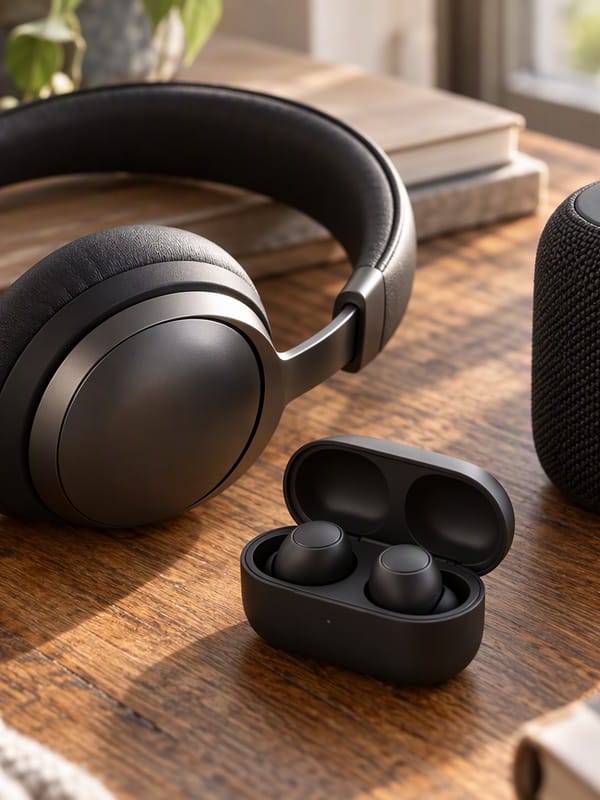
An over-ear headphone gives you the most passive isolation from the earcup seal, the most comfort across a long waking flight, and usually the longest battery. It is also the worst option for sleep: a full-size headphone is awkward with a neck pillow or a head tilted against the window.
An in-ear model packs into a pocket, seals inside the ear canal — which is genuinely better at blocking speech — and is far easier to sleep in. What you give up is battery life and, for some people, comfort across many hours of continuous wear.
If the flight is overnight and sleep is the goal, in-ear wins. If the flight is a working day at altitude, over-ear wins.
Battery and charging on a long flight
Cancellation draws power, so the figure that matters is the rated runtime with ANC switched on, not the headline number. Over-ears generally carry a longer published rating than earbuds, and a long-haul flight can outlast an earbud’s battery.
Check whether your seat has a USB socket and whether it supplies enough power to be useful, and carry the right cable regardless. A headphone that runs flat two hours from landing is a headphone you are carrying rather than wearing.
Cabin pressure and ear discomfort
Noise cancelling changes sound, not the air pressure in the cabin. The pressure change on descent is a separate thing that many people notice, and no headphone or earplug changes it. Swallowing or yawning helps some people equalise.
If discomfort is persistent or painful, that is a conversation for a qualified health professional, not a reason to buy a different product.
The comparison
| Over-ear ANC | In-ear ANC | Passive earplugs | |
|---|---|---|---|
| Engine drone | Strongest | Strong | Limited |
| Conversation and a crying baby | Weak | Better, from the canal seal | Moderate |
| Sleeping on a plane | Awkward | Easier | Easiest |
| Battery | Longest rated runtime | Shorter rated runtime | None required |
| Pack size | Largest | Small | Smallest |
| Works without power | No | No | Yes |
Our picks
Bose QuietComfort Ultra Headphones — the flight-noise specialist. Adjustable quiet, aware and immersive modes, physical controls, and a comfortable clamp for long sessions. If the single job is making a steady roar disappear, this is the one to shortlist. What you give up: the case is bulkier than the Sony equivalent, the immersive mode colours the sound noticeably, and it costs more than most people need to spend.
Sony WH-1000XM5 — the all-rounder. Light for an over-ear ANC model, with multipoint pairing so a phone call pauses your laptop audio, and a long published battery rating with ANC on. It folds flat, though not into the compact ball of the previous generation. This is the pick if you want one headphone for the flight and the office.
Bose QuietComfort Ultra Earbuds — in-ear cancellation that competes with over-ears while packing into a pocket. Better than an over-ear for sleeping upright, and the case is small enough to keep on you. What you give up: a shorter published battery rating than over-ear rivals, a case that is bulkier than most earbud cases, and an immersive mode that divides opinion.
Loop Quiet 2 Earplugs — the one that does what ANC cannot. Reusable passive earplugs with interchangeable tip sizes, no battery and no charging, blocking the higher-frequency sounds that cancellation struggles with. They are not as effective against low-frequency engine drone as noise cancelling, and they only work if the tips fit you properly.
Which to pack
- Overnight flight, sleep is the goal — in-ear ANC, earplugs, or both.
- Working on the plane — over-ear ANC for comfort across the hours.
- One pair for the flight and the office — the Sony, on the strength of multipoint and comfort.
- Light sleeper who notices every noise — earplugs alongside whatever else you bring.
When to pack both
Earplugs take up almost no space, need no charging, and cover the one job noise cancelling does badly. If you fly long-haul and you are a light sleeper, packing both is not indecision, it is matching the tool to the noise — cancelling for the engine, isolation for the cabin.
Our picks
These are the models we would shortlist for the scenarios in this article. Each entry shows the published specification highlights, what the product is genuinely good at, and what you give up.
Bose QuietComfort Ultra Headphones
Bose
If the single job is making a constant roar disappear — engines, traffic, a neighbour’s renovation — this is the model to shortlist. Immersive Audio adds a spatial mode that some listeners love and others switch off permanently.
What it does well
- Class-leading steady-noise cancellation
- Very comfortable clamp for long sessions
- Simple, readable physical buttons
What to accept
- Spatial mode colours the sound noticeably
- Case is bulkier than the Sony equivalent
- Costs more than most people need to spend
Best for: Long-haul flights · Train commutes · Very noisy homes
Published specs: Over-ear, closed-back, active noise cancelling; Adjustable quiet / aware / immersive modes; Published battery rating around 24 hours with ANC; Physical controls plus app customisation.
Last checked: 2026-09-18
Bose QuietComfort Ultra Earbuds
Bose
In-ear ANC that competes with over-ear headphones while packing into a pocket. Better than over-ears for sleeping on a plane, worse for a full working day of wear.
What it does well
- Strong cancellation in a tiny package
- Packs away far smaller than over-ears
- Comfortable for long flights
What to accept
- Battery life is shorter than over-ear rivals
- Case is bulkier than most earbud cases
- Immersive mode is divisive
Best for: Flights · Train travel · Noisy open offices
Published specs: In-ear true wireless with active noise cancelling; Immersive audio mode; Published battery rating around 6 hours with ANC; Wireless charging case.
Last checked: 2026-10-06
Loop Quiet 2 Earplugs
Loop
Passive isolation does one job that noise cancelling cannot: it works without power and it blocks sound that ANC struggles with, like a crying baby two rows back. Cheap, small, and genuinely useful.
What it does well
- No battery or charging needed
- Small enough for a pocket
- Comfortable enough to sleep in
What to accept
- Not as effective against low-frequency engine drone as ANC
- Requires correct tip sizing
- Easy to lose
Best for: Flights · Sleeping in shared rooms · Concerts
Published specs: Reusable passive earplugs; Interchangeable ear tip sizes; Published noise reduction rating; Compact carry case.
Last checked: 2026-10-06
Sony WH-1000XM5
Sony
The most complete noise-cancelling package for shared spaces: strong low-frequency cancellation, a light clamp force you can wear for a full working day, and multipoint pairing so you can jump between a laptop and a phone without re-pairing.
What it does well
- Excellent cancellation of air-conditioning and road hum
- Very light for an over-ear ANC model
- Speak-to-chat and auto-pause work well in practice
What to accept
- Does not fold into a compact ball like the previous generation
- The earcups can get warm in summer
- Premium price bracket
Best for: Open-plan offices · Long flights · Focus work at home
Published specs: Over-ear, closed-back, active noise cancelling; Multipoint Bluetooth pairing; Rated up to 30 hours with ANC on (published specification); Foldable flat for a laptop bag.
Last checked: 2026-09-18
Frequently asked questions
Is noise cancelling or earplugs better on a plane?
For engine drone, noise cancelling is clearly better, because steady low-frequency sound is the case it was designed for. For a crying baby, a nearby conversation or an alarm, passive earplugs often do more, because that is the sound cancellation handles least well. The two tools solve different halves of the same flight.
Over-ear or in-ear for sleeping on a flight?
In-ear is easier to sleep in. An earbud with a neck pillow or a head against the window is far less awkward than a full over-ear headphone, and the seal inside the ear canal blocks speech better. Over-ears are more comfortable for a long waking flight, which is a different job.
Can I wear noise cancelling headphones for the whole flight?
You can, and on a long flight the limiting factor is usually battery rather than comfort. Cancellation draws power, so a rated figure with ANC on is the one that matters, and earbuds generally run out sooner than over-ears. Carry a charging cable and check whether your seat socket supplies enough power.
Does noise cancelling help with cabin pressure?
No. Noise cancelling changes sound, not the air pressure in the cabin, and the pressure change on descent is a separate thing that many people notice. Swallowing or yawning helps some people equalise. If discomfort is persistent or painful, speak to a qualified health professional rather than buying a product.
Related
Travel
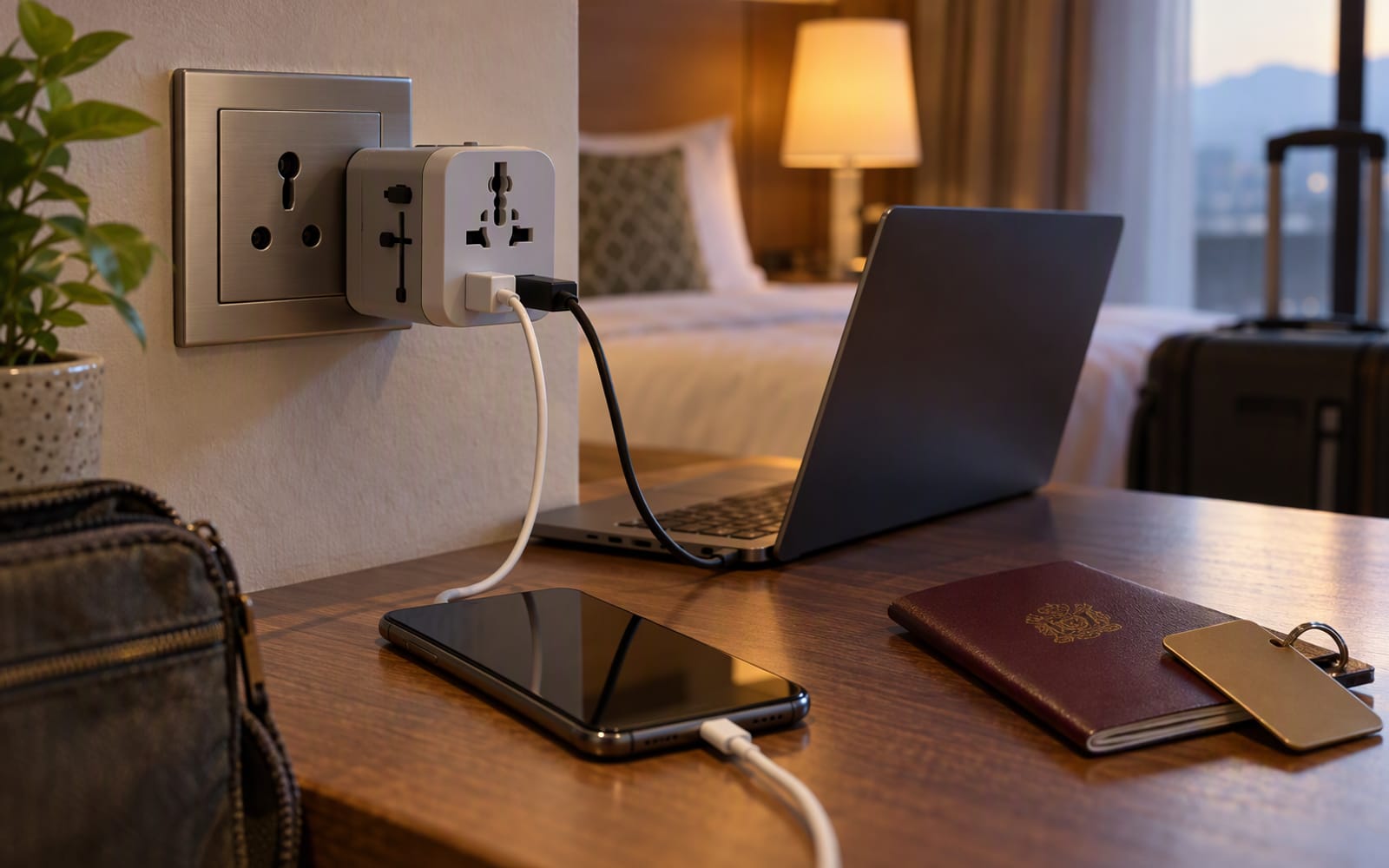
Best Travel Adapters with USB-C Power Delivery
A travel adapter changes the shape of the plug, not the voltage. How to choose between universal and single-region designs, and when laptop-class USB-C is worth it.
Audio
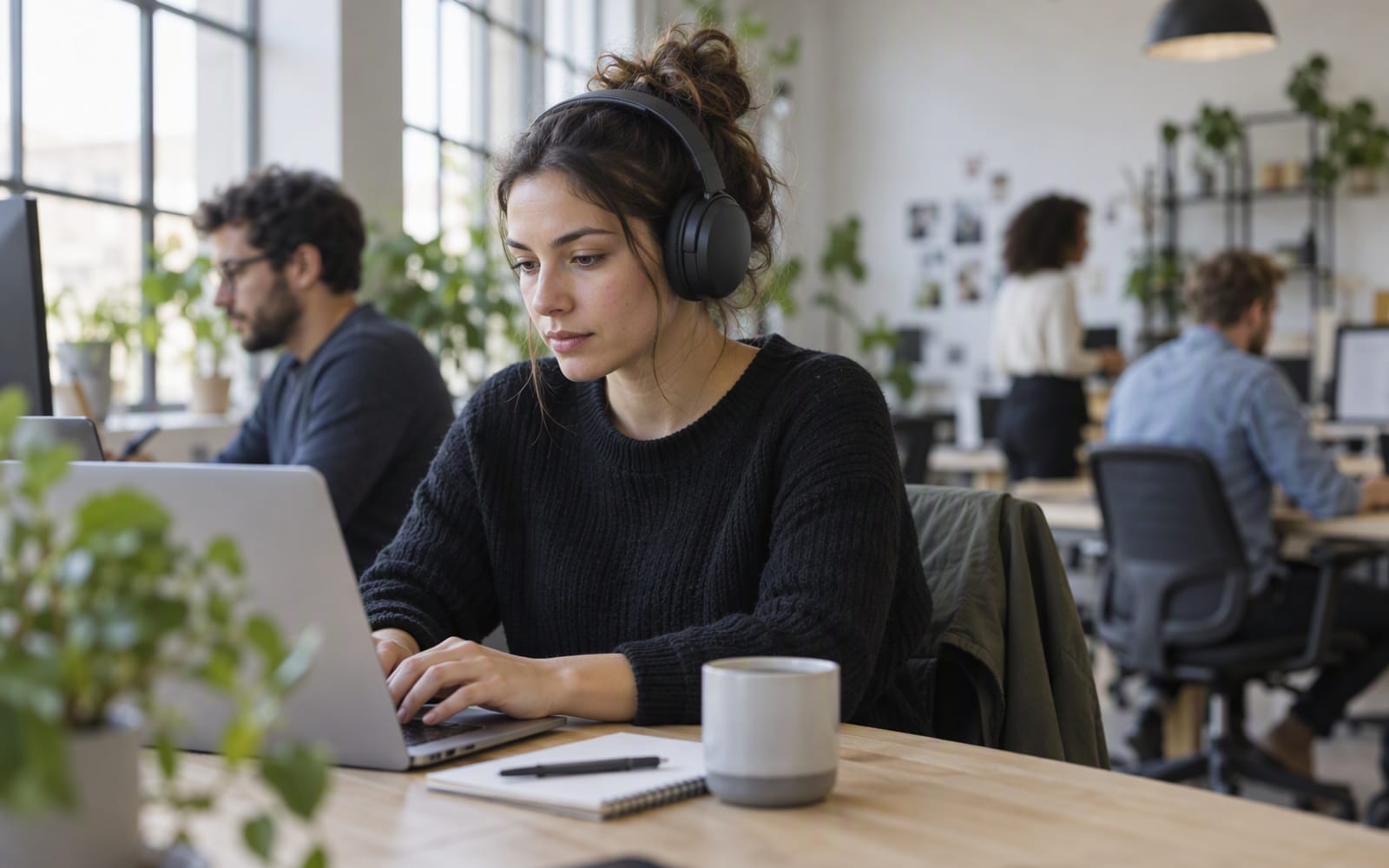
Best Noise-Cancelling Headphones for Open-Plan Offices
Open-plan offices are the hardest listening environment there is. Here is how to choose noise-cancelling headphones for a shared desk, and which models we would shortlist.
Audio
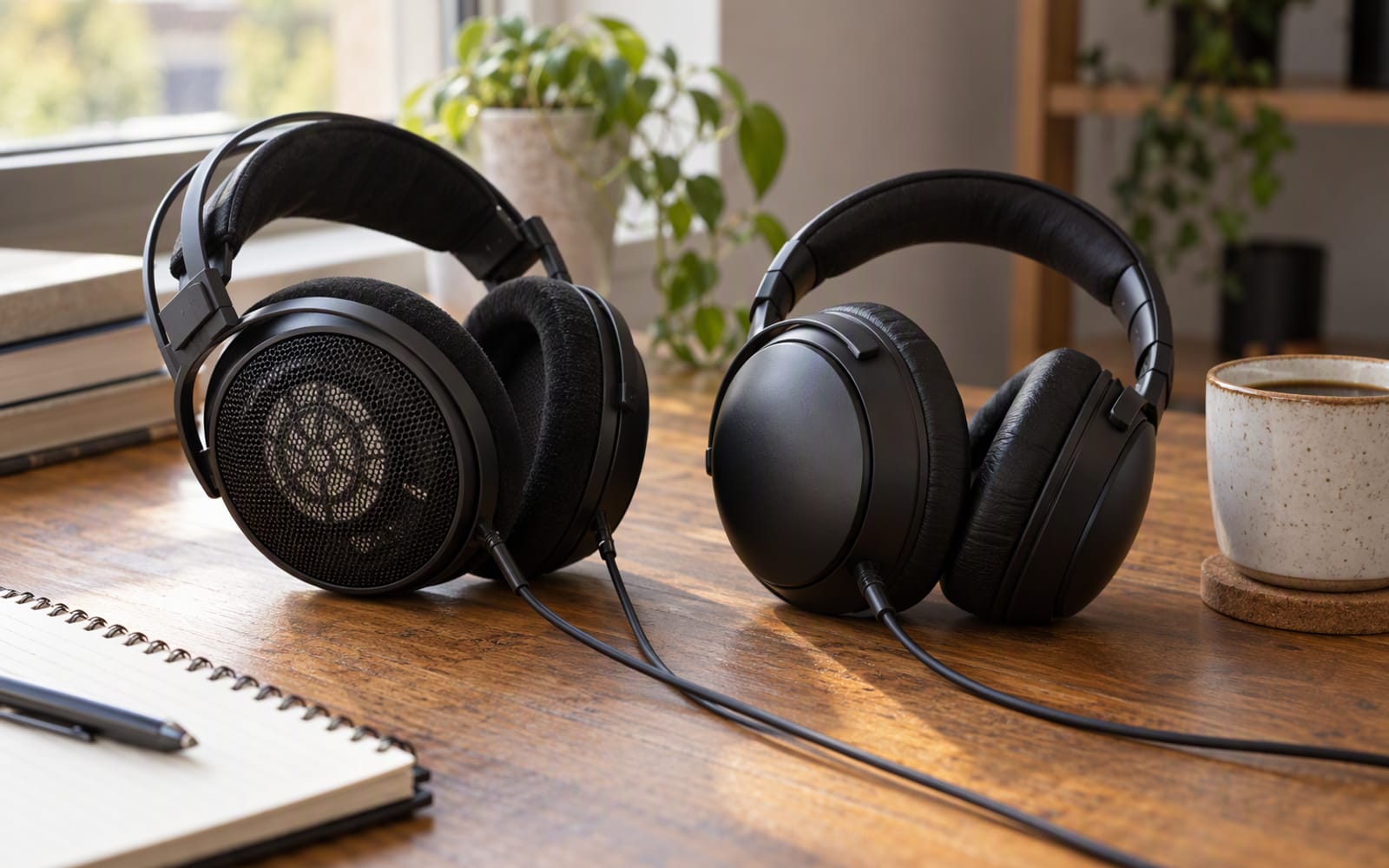
Open-Back vs Closed-Back Headphones: Which Should You Buy?
The single biggest decision in headphone buying is not the brand or the price. It is whether the cups are open or closed. Here is how the choice changes everything.